Get measurable results from online marketing
Do SEO, content marketing, competitor research,
PPC and social media marketing from just one platform.
Trusted by the world’s leading brands


See what's inside
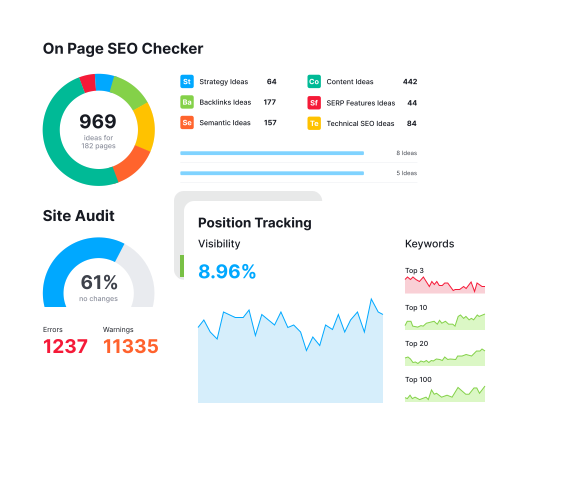
SEO
Grow organic traffic with our complete and easy SEO tools & workflow
- Uncover millions of national & local keywords
- Analyze any domain’s backlink profile
- Run technical SEO audits
- Track your SERP positions daily
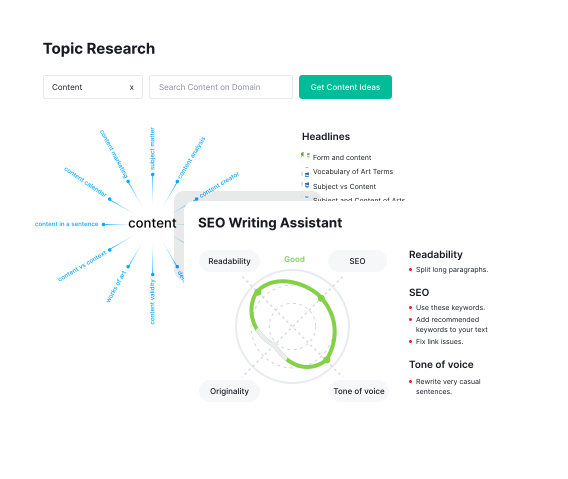
Content Marketing
Create content that ranks (no expert knowledge required)
- Find topics that resonate with your audience
- Get actionable tips to create SEO-friendly content
- Optimize your content for engagement and organic traffic
- Use AI features to easily rewrite and improve your copy
Market Research
Unveil your competitors’ marketing strategy and tactics
- Analyze traffic of any website
- Unveil competitor promotion strategies
- Get ideas for growing your market share
- Discover keyword & backlink gap

Advertising
Discover how to reach more prospects while spending less
- Find the best keywords for every PPC campaign
- Monitor your competitor’s ad copies and landing pages
- Optimize your Advertising spend (at a local level)
- Analyze Google Shopping ad campaigns

Social Media
Build your most effective social media strategy
- Schedule and post content on social media
- Analyze the performance of your posts
- Track & analyze competitor accounts
- Manage your public brand reputation

Agency Solutions
Streamline your agency processes for growth
- Get quality leads regularly
- Automate client reporting and pitching
- Create white-label client portals and share project progress details
- Manage the entire client workflow with CRM

“Semrush is like a keyword research tool, Google Trends, Moz, Hootsuite and SimilarWeb in one.”

Award-winning tools trusted by the world’s leading companies
10M
marketing professionals
have already used Semrush
21
international awards
as best SEO software suite
30%
Fortune 500 companies use Semrush as their go-to marketing tool
More data. More insights
With the size of our SEO databases and speed of our backlink crawler, imagine what you can achieve if you have the insights your competitors don’t.
Learn more
25B
keywords
43T
backlinks
808M
domain profiles
140
geo databases

Oleg Shchegolev
CEO and Founder
Our CEO
will eat his hat
... if you find another tool
that lets you do all these things
- Access over 25 billion keywords for 130 countries
- Run in-depth website audit based on 130+ checks
- Get recommendations to improve your content to increase search rankings
- Track and analyze competitor websites and marketing strategies
- Create and track your PPC campaigns
- Draft, schedule and post content on social
- Create and schedule white-labeled or branded reports
Here’s why marketers Semrush